
an honest guide to choosing organic food
vegetables without the drama
Raw leaves and herbs, buy organic. Peel it, cook it or pod it, buy regular. Origin matters on imported beans.
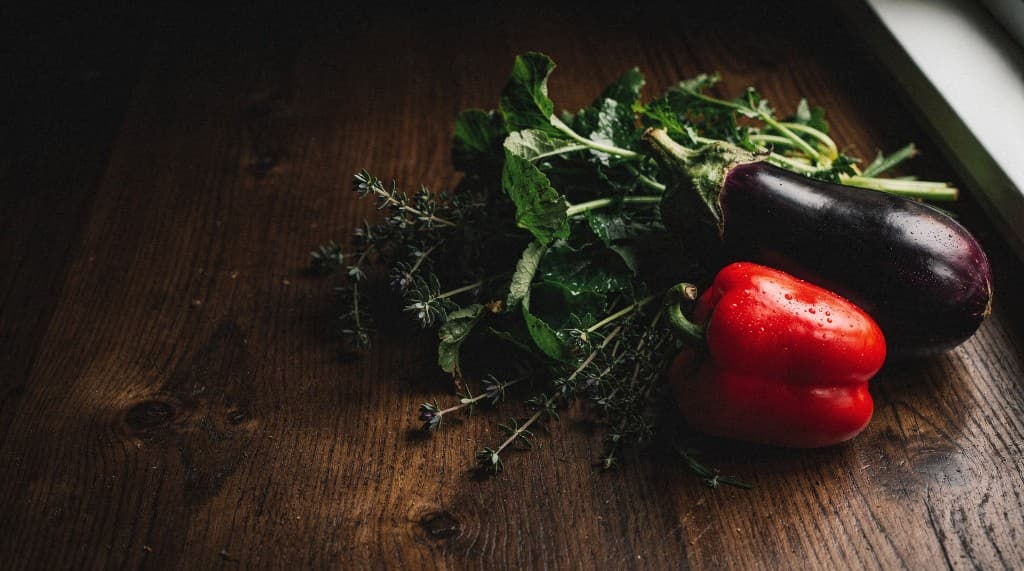
the short version
Regular vegetables from the dutch supermarket are safe. The same yearly checks that clear fruit clear vegetables too. Organic mostly lowers how often a trace of pesticide sits on them, and that only matters for part of the shelf.
It earns its place with leafy greens and fresh herbs, the things you eat raw and whole: lettuce, spinach, kale, chard, and every soft herb. And with sweet pepper and tomato, eaten raw and often, skin and all. When we are on the fence, we lean organic.
It is close to pointless on onion, garlic, mushrooms and anything you peel or boil, because the part carrying the trace never reaches your plate.
The rule of thumb, if you remember one thing: raw leaves and skins, buy organic. peel it, cook it or pod it, buy regular.
the honest starting point
Same story as fruit, with one twist. Many vegetables get cooked or peeled, and both quietly remove most of the residue before you ever eat it. So the real question is not "is it sprayed," it is "does anything reach my plate, and do I eat a lot of it raw."
For leafy greens and herbs the answer is yes, they reach your plate raw and whole. For a boiled cauliflower or a peeled carrot, almost nothing does. This guide sorts it that way. Overview first, then the reasoning.
the matrix
| vegetable | advice | why |
|---|---|---|
| lettuce, spinach, endive, chard | buy organic | large leaf surface, eaten raw and whole |
| kale, other leafy greens | buy organic | same, and often eaten in volume |
| fresh herbs | buy organic | raw, unwashed into the dish, higher in residues |
| sweet pepper (paprika) | buy organic | consistently high in residues, eaten raw with skin |
| tomato | buy organic | eaten raw and often, skin on |
| cucumber, courgette, aubergine | regular, peeled (organic if you eat the skin) | residues sit on the skin, which peels off cleanly |
| green beans, peas | regular is fine | cooking lowers residues. imported beans are the weak spot, so prefer eu grown |
| carrot, beetroot, other roots | regular is fine | residues sit on the skin, scrubbing or peeling removes them |
| potato, sweet potato | regular is fine | peeled and cooked. eat the skin daily? then lean organic |
| onion, garlic, leek | regular is fine | among the lowest in residues, outer layers come off |
| asparagus, fennel | regular is fine | naturally low |
| celery | regular is fine, wash it well | a little higher than most, but washing and cooking handle it |
| mushrooms | regular is fine | very low in residues |
| broccoli, cauliflower, cabbage, sprouts | regular is fine | outer leaves removed, then cooked |
why regular vegetables are safe
The same EFSA and NVWA monitoring that covers fruit covers vegetables. Thousands of samples a year, the vast majority within the legal limits, exposure well under the health thresholds. Low risk to the consumer, every year.
And vegetables have an extra safety valve that fruit often lacks: heat and peeling. Boiling, blanching and peeling all lower residues, sometimes a lot, and the cooking water carries part of it away when you drain it. A peeled carrot or a boiled cauliflower has almost nothing left to worry about.
The exceptions are the ones you eat raw and whole. That is where organic does its work.
where organic actually earns it
Leafy greens have a large surface, get eaten raw, and see several products during growing. Fresh herbs are the same, and they usually go into the dish unwashed and uncooked. Sweet pepper is consistently high in residues and gets eaten raw with the skin on. Tomato is eaten raw, with skin, and often daily.
These are the vegetables where the trace actually reaches your plate, so this is where your organic budget does something. On the ones at the edge, like tomato, we lean organic rather than against it.
the origin twist
For some vegetables the country of origin matters more than the organic label. Imported green beans, often from outside the eu, are the clearest example, with more limit exceedances than the dutch and european crop. If the choice is between a regular eu grown bean and an imported one, the eu one is often the better call, organic or not.
washing, peeling and cooking: what actually works
For leafy greens, removing the outer leaves and then rinsing well takes off a real part of the residue. For roots and potatoes, scrubbing or peeling does most of the work. Cooking lowers residues across the board, and draining the water helps.
Plain water is enough. Special washes and sodium bicarbonate tricks add little you can measure. And the same warning as always: do not let any of this lower how many vegetables you eat. Eating enough vegetables outranks the organic question by a wide margin.
if you want to be stricter
Young children, pregnant women, and anyone living on green smoothies or eating large amounts of one raw vegetable daily have the most reason to choose organic on the leafy greens, herbs and peppers. Reasonable, not required. For the cooked and peeled half of the shelf, regular stays the sensible choice.
the short of it
Buy organic for what you eat raw and whole: leafy greens, herbs, peppers, tomato. Save your money where you peel, cook or pod it, which is most of the rest. Watch origin on imported beans. And keep the vegetables coming, in whatever form you will actually eat them.
The goal is not a perfect basket. It is a better one.
sources
- EFSA, The 2024 European Union report on pesticide residues in food. EFSA Journal 2026;24(5):e10054, and the annual EU reports for 2019 to 2023.
- NVWA (Netherlands Food and Consumer Product Safety Authority), national residue monitoring and import control results, including findings on imported beans.
- RIVM (National Institute for Public Health and the Environment), dietary and cumulative exposure assessments.
- EFSA, database of processing factors for pesticides. The basis for the effect of washing, peeling and cooking.
- European Commission, Regulation (EC) No 396/2005 on maximum residue levels of pesticides.
- Barański et al., 2014, British Journal of Nutrition. Lower frequency of pesticide residues in organic crops.
- Voedingscentrum, "Biologisch". Consumer guidance that organic is not proven healthier than conventional.