
an honest guide to choosing organic food
meat, fish and eggs without the drama
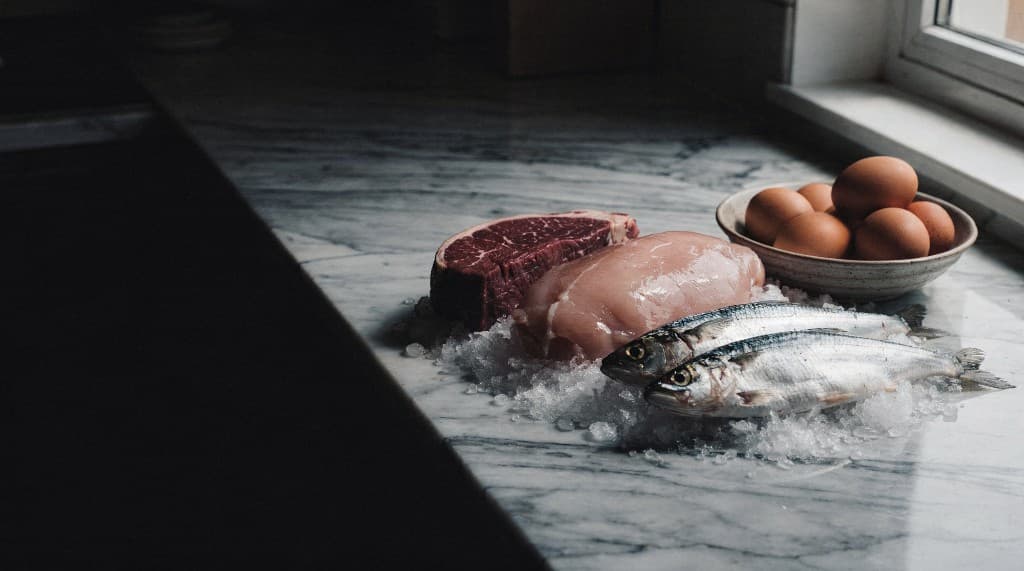
Organic meat is about antibiotics and welfare. Fish is about species, not the label. Eggs have no clean winner.
the short version
For meat and poultry, organic is not about residues, it is about antibiotics and animal welfare. Dutch livestock farming has cut antibiotic use hard, and organic uses less still. If that matters to you, buy organic. For your own safety, regular is already fine.
For fish, forget the organic label almost entirely. Only farmed fish can be certified organic, wild fish never is, and "wild equals cleaner" is not even reliably true anymore. What matters with fish is the species and where it comes from, not a certificate.
For eggs, there is no clean winner. Free range and organic hens forage, which is good for welfare but can pull in more environmental contaminants from the soil.
The rule of thumb, if you remember one thing: with animals, the label is about welfare and antibiotics. with fish, it is about the species. eat the small oily fish, go easy on the big predators.
the honest starting point
This is the category where the organic label answers the wrong question. Pesticide residues are rarely the issue in meat, fish or eggs. The real variables are antibiotics, welfare, the feed the animal ate, and for fish and eggs a set of environmental contaminants that no farming certificate reliably controls.
So we sort this one differently. Not "cleaner or not," but "what is the actual variable here, and does organic touch it."
the matrix
| product | advice | why |
|---|---|---|
| beef, lamb, goat | regular is safe. organic for welfare | residues low. organic means grazing and fewer inputs |
| pork | regular is safe. organic for welfare and antibiotics | residues low, the difference is the system |
| chicken, turkey | regular is safe. organic for welfare and antibiotics | poultry is where antibiotic resistance ran highest, organic uses less |
| processed meat, cold cuts | the label is not the point | eat less of it. that decision beats organic versus regular |
| eggs | regular or organic, no clear winner | foraging hens can pick up more soil contaminants. the system and the ground decide |
| farmed fish, salmon, trout | choose on feed and origin | organic farmed can be slightly lower in pollutants, but feed matters more than the label |
| wild fish, cod, herring, mackerel, sardines | the label does not apply | wild is not organic. small oily fish are a strong choice |
| tuna, swordfish | mind the mercury | large predators concentrate mercury regardless of label. limit if pregnant or young |
| shrimp, mussels | choose on origin | certification is limited, origin tells you more |
meat and poultry: the real variable
Residues are seldom the problem in meat. The things worth caring about are antibiotic use and welfare. The netherlands has cut veterinary antibiotic use sharply over the past fifteen years, and organic farming uses less again. Organic also means more space and more time outside.
For your health specifically, the bigger lever is not organic versus regular, it is how much processed and red meat you eat. Moderating that outweighs the label by a distance.
fish: species over label
Here is the misunderstanding worth clearing up. Organic certification for fish applies to farmed fish. Wild fish is never organic, so "buy wild to be clean" is a category error. And the old assumption that wild is automatically purer no longer holds. As fish feed changed over the years, farmed salmon often ended up lower in dioxins and pcbs than wild, not higher.
What actually matters: large predatory fish like tuna and swordfish concentrate mercury, which is the real reason to limit them, especially during pregnancy and for young children. Small oily fish like sardines, herring and mackerel give you the benefits with less of that concern. Eat those with confidence.
eggs: no clean winner
The fipronil scare years ago came from illegal use, not normal farming. The genuinely tricky part is that free range and organic hens forage in soil and can take in more environmental contaminants such as dioxins than caged systems. So there is no simple "organic is cleaner" here. Buy on welfare grounds if you like, but do not expect a health gain.
the short of it
Buy organic meat for welfare and antibiotics, not for residues, and remember that eating less processed meat matters more than either. For fish, ignore the label and choose by species and origin, favour small oily fish, and limit big predators if you are pregnant or feeding kids. For eggs, pick on welfare, because on contaminants there is no clear winner.
The goal is not a perfect basket. It is a better one.
sources
- EFSA, monitoring of residues and contaminants in food of animal origin, including dioxins and pcbs in fish.
- NVWA (Netherlands Food and Consumer Product Safety Authority), residue monitoring and the fipronil case background.
- MARAN and NethMap, annual reports on antibiotic use and resistance in dutch livestock.
- RIVM (National Institute for Public Health and the Environment), exposure assessments for contaminants in fish and eggs.
- Studies comparing contaminant levels in farmed and wild salmon, showing the shift over time as feed changed.
- WHO and FAO guidance on methylmercury in fish and advice for pregnant women and young children.
- Voedingscentrum, guidance on fish choices and processed meat.